

When festivals collaborate, the space for European stories, for emerging authors and for new audiences expands, says Katerina Gabunija, coordinator of the ICFF “Manaki Brothers”.
Organized by the Macedonian Creative Europe Desk in collaboration with the Hungarian Creative Europe Desk (Culture and MEDIA), a joint session of the two sub-programmes was held on March 11, with the MEDIA session focusing on the calls for European Festival Networks, VOD Networks and Mini Slate.
At the first session ICFF “Manaki Brothers” was represented by Katerina Gabunija, Festival Coordinator, where she shared her experiences from the festival’s participation in the “Network of Festivals in the Adriatic Region”.
Gabunija emphasized that for the ICFF “Manaki Brothers” being part of the Adriatic Festival Network has meant a lot more than just partnership between festivals. The network has become a platform for knowledge exchange, strengthening regional cooperation and establishing new models of engagement with audiences and filmmakers.
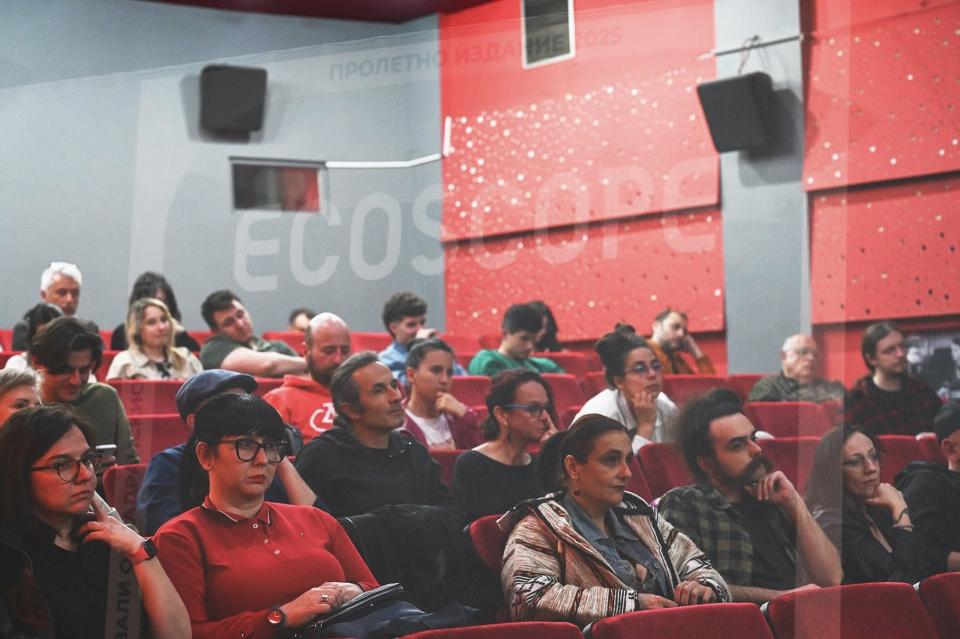
-Within the scope of this network, the “Manaki Brothers” Festival implemented several activities aimed at attracting audiences, educating, and promoting European Cinema, such as: “Ecoscope”, an initiative that connects cinema with the topics of sustainable development and the ecology, and a workshop on light pollution, under the mentorship of film director Marija Dzidzeva and cinematographer Fejmi Daut, which was attended by young film lovers from several countries in the region. The workshop was a unique opportunity for young participants to learn about the impact of light – both in cinema and on the environment – through practical and creative work. The theme of this workshop was “light pollution”, said Gabunija.
Another significant project within the network is the “Adriatic Audience Award”, an initiative aimed at actively involving the audience in the cinematic process. In addition to juries, it is the audience from several festivals in the region that votes and selects the winning film.
-Currently, as part of this initiative, we are working on the distribution and promotion of the winning film “Maldoror”, which is supported by the Creative Europe MEDIA Programme. The aim of this activity is to help the film reach a wider audience through the festival network and to increase its visibility at the regional level. In parallel, we are already actively engaged in the selection and pre-selection process of the films for the “Adriatic Audience Award 2026”, which shows that the network is not just a short-term project, but a dynamic platform that is continuously developing, informed Gabunija.
The network also initiated the special “Winter Edition” of the festival network which keeps the communication with the audience alive beyond the traditional festival season.
-The interest from the audience this year was truly impressive. For the first time ever, all the screenings were booked on the first day of the program announcement, followed by an additional request for new screenings. These results show that when festivals cooperate, a real opportunity is created to attract a new and active audience for European cinema. This is where the true value of the Creative Europe Programme become apparent – not only as financial support, but as a framework that fosters the creation of strong European cultural
networks, said Gabunija.
She emphasized that when we talk about the theme “Collaborate, Create, Add Value”, the the Network of the Festivals in the Adriatic Region is an excellent example of how through cooperation, greater cultural impact, new audiences and greater opportunities for European authors can be created.
-Festivals are not just places to screen films. They are places to generate ideas, attract audiences and connect cultures. It is through initiatives such as the “Network of Festivals in the Adriatic Region”, supported by the “Creative Europe” Programme, that festivals become active drivers of cultural cooperation in Europe. When festivals cooperate, it is not only the number of screenings that increases. The space for European stories, for new
authors and for new audiences also expands. And that is exactly why I believe that the future of European culture lies precisely in such networks, partnerships and joint initiatives, concluded Gabunija.